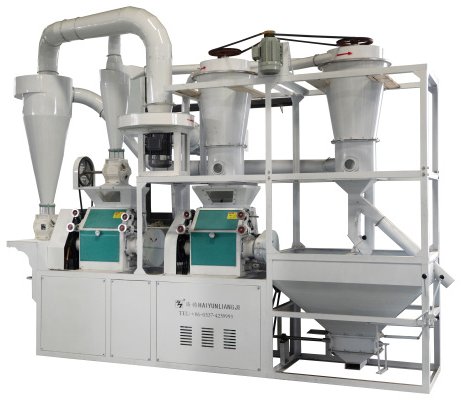
Small commercial · 400–450 kg/h
6FTS Double Mill Unit
Bran and core separated from the first break.
- 60+ years manufacturing
- 10–500 t/d capacity range
- 100+ patents
- Turnkey commissioning
Overview
What this plant actually is
The double mill adds a core-collector to the automatic-feed platform. Wheat is split and the endosperm released early, so the following reduction passes do less work and produce less bran powder. In blind tests the process yields visibly whiter flour at the same extraction.
Bran/core separation built into the flow sheet
Two mill stands on one frame with shared drive
20.5–22 kW total installed power
Consistent granulation for steamed bread and noodle flour
Standard models and parameters
All figures are nominal at 380 V / 50 Hz with wheat at 12.5% incoming moisture and 76% extraction. Deviations of ±8% are normal and depend on wheat hardness, roll condition and operator settings.
| Model | Capacity | Power / consumption | Weight / footprint | Configuration |
|---|---|---|---|---|
| 6FSZ-10A | 400–450 kg/h | 20.5 kW | 2,000 kg 4000 × 1500 × 3100 mm | Standard core-collector configuration |
| 6FSZ-10B | 400–450 kg/h | 22 kW | 2,000 kg 4000 × 1500 × 3300 mm | Taller column, larger sifter area |
Process flow
- 1 Intake
- 2 Cleaning (external or integrated)
- 3 First break (split)
- 4 Core collector
- 5 Reduction mill
- 6 Sifter
- 7 Flour / bran
How to select
The double mill is the correct step up when customers start asking about flour colour and gluten quality rather than just price per bag. The extra 6–8 kW buys a cleaner granulation that commands a premium at retail.
Typical applications
- Steamed bread flour
- Noodle flour
- Regional bakery flour
- Semi-industrial village mills
From the brochure
6FTS Double Mill Unit
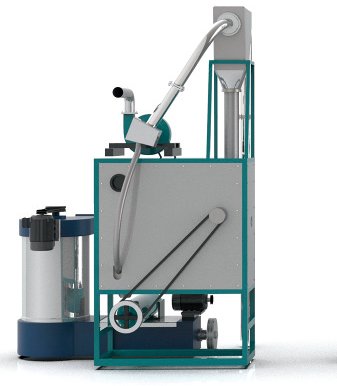
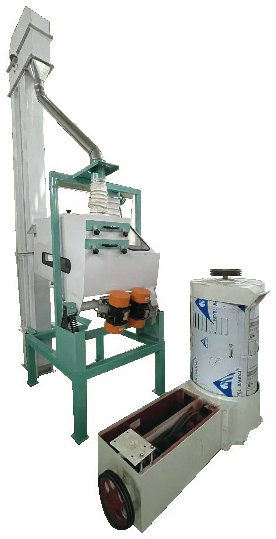
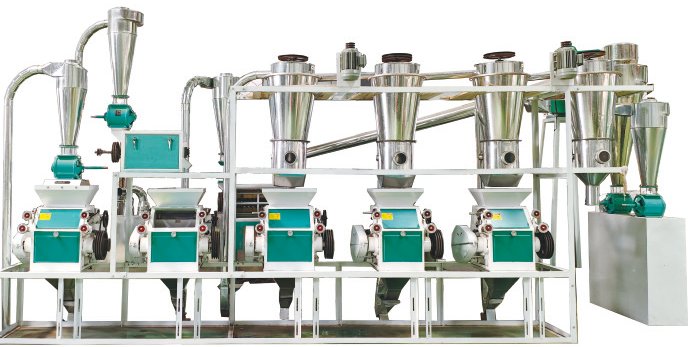
Photographs and parameter panels reproduced from the 2026 wheat milling catalogue. Dimension drawings and equipment lists are the original manufacturer figures.
Answers
Frequently asked questions
Straight answers to the questions engineers and mill owners actually ask us during plant sizing. If your case is not covered, send the wheat specification and your target tonnage.
Ask an engineer →- What is bran-core separation?
- Instead of grinding everything together, the first break splits the wheat so the starchy endosperm can be graded out before it is contaminated by bran flakes. The result is lower ash in the patent flour stream.
- Is a separate cleaning house required?
- For wheat above 1.5% impurity, yes — a small destoner and a vibrating screen upstream will pay for themselves within a season. The mill itself ships without cleaning unless specified.
Continue
Next: 6FSZ-20 Five Mill Unit
A complete mini-mill: cleaning, 3B2M milling, sifting. — 16–18 t/d
View 6FSZ-20 Five Mill Unit →Next step
Send your tonnage. Get a flow sheet in 12 working hours.
Send us: daily capacity target, wheat type and quality, available building dimensions, and local power supply. We reply within 12 working hours with a preliminary flow sheet, equipment list and budget range — no obligation.