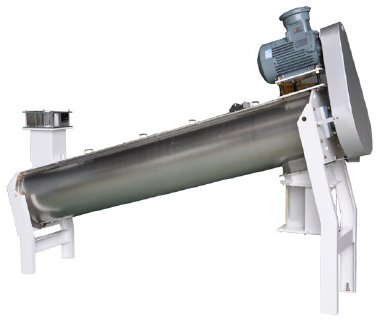
Wet cleaning · Model XMS / FZSQ
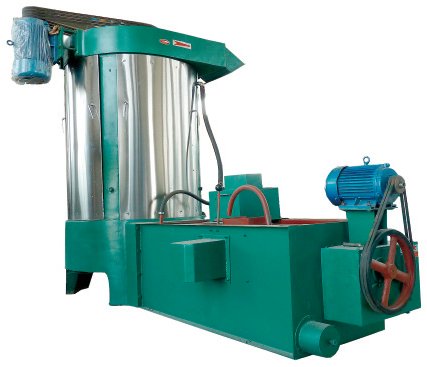
Wheat Washer, Destoner & Dryer
Washes the crease. Nothing else reaches inside it.
- 60+ years manufacturing
- 10–500 t/d capacity range
- 100+ patents
- Turnkey commissioning
What it does
The crease of a wheat kernel traps dirt, pesticide residue and micro-organisms that no dry process can reach. A washer-destoner floods it out, floats off light impurities, sinks the stones, and then centrifuges the surface water back down to a controlled moisture.
Technical parameters
Nominal values at standard conditions. Confirm final specification on the order drawing.
| Model | Capacity (t/h) | Power | Weight | Dimensions (mm) |
|---|---|---|---|---|
| FZSQ32×150 | 3–6 | 3 kW | 250 kg | — |
| FZSQ40×200 | 6–12 | 4 kW | 280 kg | — |
| FZSQ40×250 | 12–18 | 5.5 kW | 460 kg | — |
| FZSQ50×250 | 16–22 | 7.5 kW | 540 kg | — |
| FZSQ50×280 | 18–25 | 11 kW | 560 kg | — |
| FZSQ50×300 | 20–30 | 11 kW | 620 kg | — |
| XMS40×100 | 1.2–2.0 | 2.2 + 0.75 kW | 460 kg | 2000 × 800 × 1500 |
| XMS50×110 | 2.5–4 | 4 + 1.1 kW | 640 kg | 2700 × 1000 × 1700 |
| XMS60×130 | 4–6 | 5.5 + 1.5 kW | 1,000 kg | 2700 × 1200 × 1860 |
| XMS90×150 | 6–8 | 11 + 2.2 kW | 1,800 kg | 3450 × 1450 × 2400 |
Selection guidance
Wet cleaning costs water, effluent treatment and 3–5% extra drying load. It is justified when wheat arrives with visible soil in the crease, when the mill serves a premium or export market, or when pesticide residue limits are contractually enforced.
Maintenance
Water consumption is 0.8–1.2 m³ per tonne of wheat. Budget for a settling pit and a recirculation pump — discharging once-through is illegal in most jurisdictions now.
Selection cross-check
Destoning: dry gravity vs wet washer
Stone removal is mandatory. Whether you also wash is an economic decision driven by wheat dirt load and the flour market you serve.
This machine
Wheat Washer, Destoner & Dryer
XMS / FZSQ
Choose it when
Wheat with high soil contamination, or when the flour must meet a low bacterial count or a premium ash specification. Washing removes surface dirt that no dry process reaches.
Watch out for
Adds 3–6% moisture that must be dried back, costing 8–15 kWh/t and requiring a centrifuge plus dryer. Produces effluent that needs treatment. Capital cost is 4–6× dry destoning.
Alternative
Gravity Classifying Destoner
TQSF
Choose it when
Every dry cleaning line. Air classification plus a vibrating deck separates stones by density with no water, no effluent and no drying cost.
Watch out for
Cannot remove surface-borne dirt, bacteria or embedded sand. If your wheat is heavily soil-contaminated, dry destoning leaves the dirt on the grain.
Open Gravity Classifying Destoner →Decision rule
Dry destoning is correct for clean wheat and standard flour. Wet washing earns its cost only where dirt load is high or the market pays a premium for low bacterial count.
Answers
Frequently asked questions
Straight answers to the questions engineers and mill owners actually ask us during plant sizing. If your case is not covered, send the wheat specification and your target tonnage.
Ask an engineer →- Can I skip wet cleaning?
- Yes, with dry cleaning plus two scourer passes you can reach good commercial quality. Wet cleaning is what separates a commodity flour from a flour that passes residue testing for export.
- How much water does it use?
- Expect 0.8–1.2 m³ per tonne of wheat processed. A 30 t/d plant therefore needs roughly 30 m³/day, most of which is recoverable with a settling and filtration loop.
From the brochure
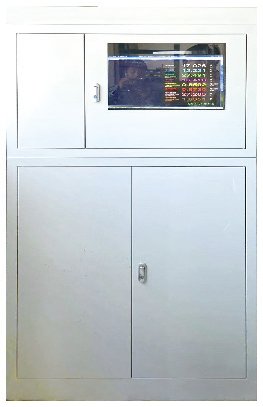
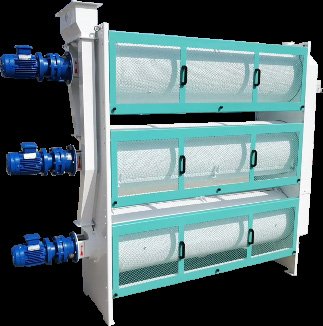
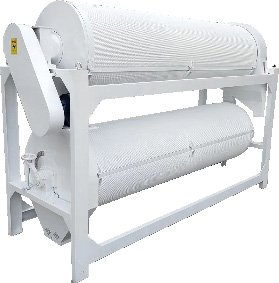
Wheat Washer, Destoner & Dryer catalogue images
Photographs and parameter panels reproduced from the 2026 catalogue. Captions are the original brochure text.
Next step
Send your tonnage. Get a flow sheet in 12 working hours.
Send us: daily capacity target, wheat type and quality, available building dimensions, and local power supply. We reply within 12 working hours with a preliminary flow sheet, equipment list and budget range — no obligation.